Goju Ryu is a traditional style of karate
that remains relevant to the modern age
First and foremost taking up Goju Ryu karate will reward you with a challenging and immensely enjoyable pastime. Training will quickly improve your physical fitness, stamina and agility.
Next Goju Ryu remains a very effective and complete unarmed fighting system. We teach strikes, blocks, locks, throws and grappling techniques as part of the syllabus.
The relevance of Goju Ryu in the modern world is measured by the fact that our students continue to do well in open international competitions against other styles. Our instructors have also taught special services personnel all over Europe.
To hold a black belt in Goju Ryu karate reflects years of hard and dedicated training, which is why it is so respected by employers and universities alike.
The BKA is also at the heart of a large friendly community of like-minded students of karate that regularly come together for regional and national training sessions and competitions.
High standards of instruction for both
Juniors (7+ yrs) and Adults of all ages
Sensei Ernie Molyneux ranks amongst the best in the World. So we can understand why some may find the prospect of training under him a little daunting.
It would be a mistake to let that stop you or your children from trying one of our free trial lesson. It is a truism of life that if you wish to learn a new skill, then make it easier by finding a master such as Sensei Ernie to teach you.
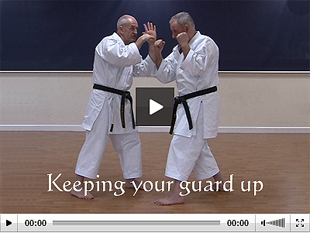
View video …
Goju Ryu Karate - A martial art originating from Okinawa, Japan.
‘Karate’ as a name for a martial art is credited as originating from the Japanese island of Okinawa in the early part of the 20th Century. The term is a combination of two Japanese Kanji characters ‘Kara’ and ‘Te’ literally meaning ‘Empty’ and ‘Hands’.
The modernisation of Japanese culture at the end of the 19th Century allowed the martial art masters of the time to travel more freely. It was inevitable that a consolidation of the many different regional styles of Japanese and Okinawan karate would occur. Today only a handful of authentic, traditional variants of karate are officially recognised by the Japanese, and Goju Ryu is one such martial art.
Goju Ryu karate is credited with being founded in 1933 by Chojun Miyagi (1888-1953). It is a traditional form of karate that can trace its origins back to the regional style of Naha-te taught by Kanryo Higaonna (1853-1914) in the Naha district of Okinawa during the later half of the 19th Century. The teaching methods of Naha-te can in turn be traced back to the ancient style of martial arts taught by the Shaolin Monks of China.
In translation ‘Go” means ‘hard’ (to smash, to resist, to be solid), and ‘Ju’ means ‘soft’ (to deflect, to whip, to react fast). The application of both hard and soft techniques defines the Goju Ryu style of karate.
Goju Ryu today
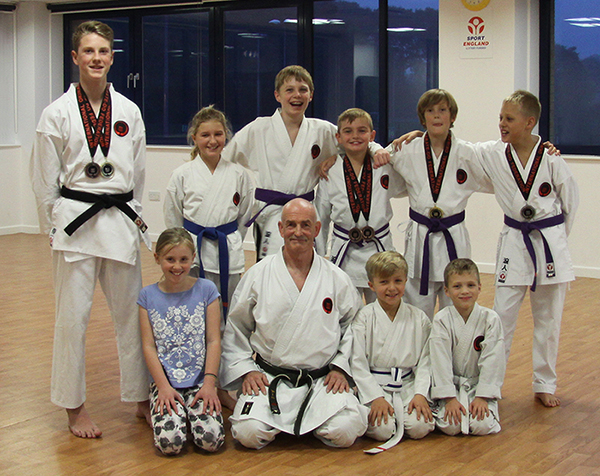
Goju Ryu is a flourishing and popular martial art taught in over 50 countries under the auspices of the IOGKF of Japan. The EGKA is a non-profit making association with over 1500 members. It is affiliated to the IOGKF and is committed to the governance of Goju Ryu in England.
Sensei Ernie is the Chief Instructor of the EGKA, and he also sits on the IOGKF Executive Technical Committee as an international Vice Chief Instructor.
At a time when many martial arts have become so diluted they now have more in common with aerobic dance classes, Goju Ryu has remained true to its roots. We have no intention of dropping our standards.
Goju Ryu remains an effective self defence system, teaching strikes, blocks, locks, throws and grappling techniques. As a fighting system, it remains just as relevant today as it did to the original masters from Japan’s distant past when self defence was a necessity and not the recreational pastime we enjoy.
The reward of training
Nothing that is worth having comes easy, and it is no different with Goju Ryu. It can takes many years of hard, but enjoyable, training before most individuals begin to feel confident about their karate skills.
In an age when instant gratification seems to be the only priority, it is rewarding to see so many younger students join us each year and stay the course to earn their black belt many years later.
It may be that students start out believing that self-defence and learning to fight are their primary goals. They soon discover those particular aspects are only a by-product of the more rewarding pursuit of self-improvement through regular training. Improving physical strength, agility, mental concentration, tenacity and self-confidence all come into the mix.
For parents looking to instil a sense of self-discipline and respect for others in their children, we commend Goju Ryu training as a worthy method of achieving those worthy aspirations.
BKA TRAINING TIMES
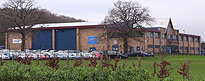
Sir David English Sports Centre
| Tue: | 17:00-18:00 | Kids | 6-10 yrs |
|---|---|---|---|
| 19:15-20:30 | Snrs | 15+yrs | |
| Thu: | 17:00-18:00 | Kids | 6-10 yrs |
| 19:15-20:30 | Snrs | 15+yrs |
Beginners always welcome
Call 07909 956940
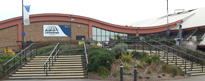
Southbourne Dojo
| Mon: | 18:30-20:00 | Snrs | Adults |
|---|
Beginner‘s free trial
Try 2 lessons for free. No contracts. No obligations. Nothing to pay.
Just turn up on Tuesday or Thursday wearing a T-shirt and tracksuit bottoms and give it a go …
Read more …